
A Joyagoo shipping calculator is useful when its inputs describe the parcel you intend to send. Before looking at the result, check the destination, contents, packing and service. Otherwise a precise-looking number can answer the wrong question.
A calculation example, not a quote
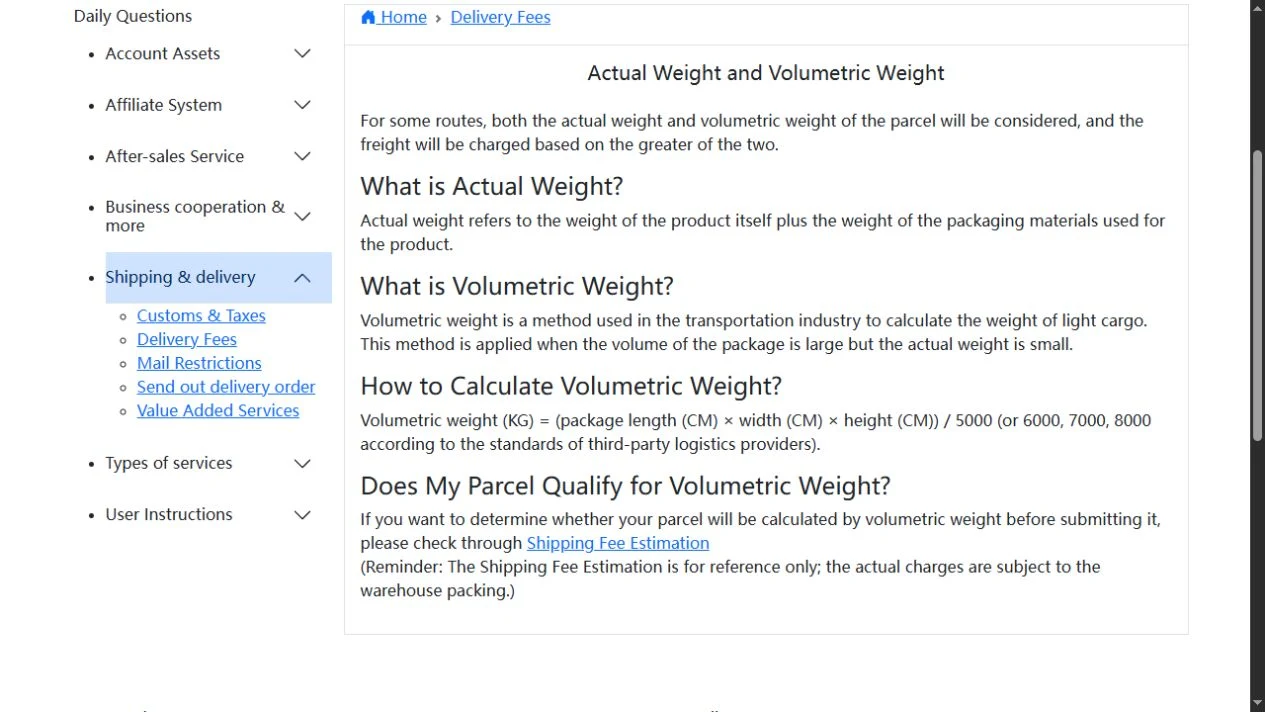
Suppose a parcel weighs 3.6 kg after packing and measures 42 × 32 × 24 cm. For this example only, assume the selected route uses a divisor of 6,000 and charges on the greater weight.
42 × 32 × 24 ÷ 6,000 = 5.376 kg of volumetric weight.
Under those assumptions, the comparison uses 5.376 kg rather than 3.6 kg, before any route-specific rounding or other charges. These dimensions and weight are illustrative inputs, not a measured customer shipment. The example does not establish a shipping price or a rule for all routes.
Test a packing change
Now imagine the same contents safely fit into 42 × 32 × 20 cm. With the same example divisor, volumetric weight becomes 4.48 kg. That is a smaller volume, but the warehouse must confirm the actual packing and weight before the result can inform a real payment.
Bags and accessories in the catalog may have different protection needs. Do not compress or remove protective material solely because a hypothetical calculation looks cheaper.
Keep comparisons consistent
If you change the destination, service and dimensions together, you cannot tell which change caused the difference. Adjust one input at a time while comparing, then check the complete final parcel.
Confirm whether the available route uses actual weight, volumetric weight or another stated charging method. Joyagoo lists several divisors in its explanation; 6,000 is the assumption above, not a platform-wide promise.
Use the result at the right stage
An early estimate supports a purchase budget. A packed-parcel measurement supports a later shipping decision. Neither proves customs charges or arrival time. Read shipping cost guidance and resolve QC questions before confirming what will travel.